
Time Management Tips for Freelance Creatives: Staying Productive and Balanced

For many freelance creatives, managing time can feel like an endless juggling act. Between multiple projects, client deadlines, and maintaining a personal life, the days can easily feel too short. I’ve been there. In the early years of my business, I often found myself working late into the night or sacrificing weekends to catch up.
But it doesn’t have to be that way. With a few key strategies, I transformed the way I manage my time and regained control of my work-life balance. In this blog, I’ll share five practical tips that have helped me (and can help you) stay productive, focused, and sane as a freelance creative.
1. Prioritise Your Tasks
When everything feels important, it’s easy to feel overwhelmed. That’s why I start each day by identifying my top three priorities. These are the tasks that will have the biggest impact on my day or projects.
Once I’ve identified them, I work through each task one at a time. Multitasking might seem productive, but studies show it reduces focus and overall efficiency. Instead, give your full attention to each task, complete it, and then move on to the next.
Pro Tip: Ticking tasks off your list as you go creates a sense of achievement, which keeps you motivated throughout the day.
2. Use Time Blocking
Time blocking has been a game-changer for me. This strategy involves setting aside specific blocks of time for focused work, meetings, admin tasks, and breaks. It forces you to structure your day, making it easier to stay on track and work efficiently.
For instance, I might allocate two hours in the morning for creative work, schedule client calls for the afternoon, and leave 30 minutes at the end of the day for admin tasks like invoicing or emails.
Why It Works: Knowing exactly when and where you need to focus eliminates the mental clutter of wondering what to tackle next.
3. Eliminate Distractions
Distractions are the productivity killer we all face. Whether it’s the ping of notifications, an unexpected phone call, or even the temptation to scroll through social media, interruptions can eat away at your focus and momentum.
What I Do:
I turn off non-essential notifications during work hours.
I set clear boundaries with friends and family around my work time.
I listen to music to create an environment conducive to work and creativity.
Creating a distraction-free zone is one of the best ways to maximise the quality of your work.
4. Take Regular Breaks
Breaks aren’t a luxury; they’re essential. A 5–10 minute break every hour helps refresh your mind and prevent burnout. For me, breaks double as a reward system. Knowing I have a short rest coming up motivates me to finish my current task.
Ideas for Breaks:
Take a quick walk.
Stretch or play with a pet.
Grab a coffee or a snack.
Even short pauses can reset your focus and improve productivity.
5. Apply the 2-Minute Rule
This simple rule has saved me from countless moments of procrastination: if a task will take two minutes or less, do it immediately.
Why? The energy spent scheduling or thinking about that task often exceeds the time it takes to complete it. By tackling small tasks on the spot (whether it’s replying to an email, filing a document, or tidying your workspace) you lighten your mental load and free up time for bigger priorities.
Example: That quick reply to a client? Done. Forwarding an invoice? Checked off. By handling these minor tasks in real time, you can keep your to-do list manageable.
Productivity should make your business easier to run
As freelance creatives, our time is one of our most valuable resources. Managing it effectively not only boosts productivity but also protects your well-being and work-life balance. These five strategies: prioritising tasks, time blocking, eliminating distractions, taking breaks, and following the 2-minute rule, have been instrumental in my journey from overwhelmed to balanced.
If you’re feeling the strain of too many tasks and not enough hours, try incorporating one or more of these tips into your routine. Over time, you’ll find a rhythm that helps you stay productive, focused, and sane, even during the busiest periods.
Want more structure behind your creative business?
Time management gets easier when the rest of your business is clearer too.
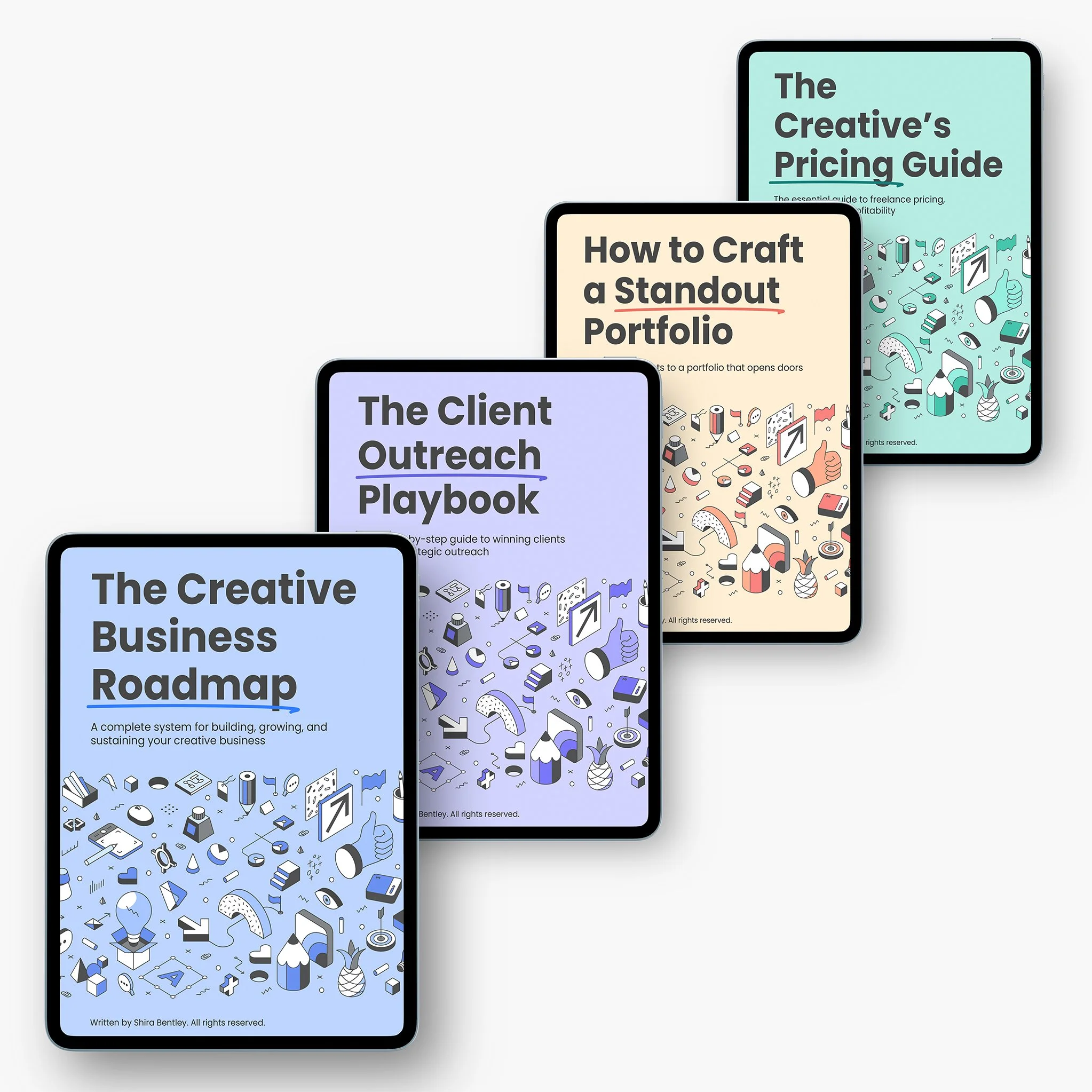
The Creative Business System brings together the core areas that tend to create the most friction for independent creatives, including pricing, outreach, portfolio strategy, planning and day-to-day business systems.
Inside, you’ll get:
The Creative Business Roadmap
specialist guides on outreach, pricing and portfolios
a comprehensive workbook
contracts, templates and trackers
practical tools to help you organise the business behind your creative work
You can work through the full system or start with the area that feels messiest right now.
More practical help for your creative business
Explore guides, templates, tools and free resources for designers and illustrators who want more clarity around clients, pricing, portfolios and running their business.

Stay in the loop
Subscribe to my newsletter for thoughtful insights, practical advice, and useful resources for building a sustainable creative business.