

One of the questions I’m asked most often is: How do you actually find clients as a designer or illustrator?
There isn’t one perfect platform or tactic that suddenly makes the work appear.
Most sustainable creative businesses are built through a combination of things: a strong portfolio, visibility, relationships, proactive outreach, referrals, and simply staying consistent for long enough to see what works.
Some of those approaches will suit you more than others, and that’s fine.
The goal isn’t to do everything. It’s to build a few reliable ways for the right people to discover your work, understand what you do and feel confident getting in touch.
Here are six practical ways to start doing that:
1. Build a portfolio for the work you want
Your portfolio should make it easy for a prospective client to understand what you do and where you fit.
Include enough range to show what you’re capable of, but don’t fill it with work you don’t actually want more of.
If you want branding clients, show branding. If you want to illustrate book covers, show book covers. If you want editorial work, include editorial-style projects.
Clients can only respond to what you show them.
2. Use social media strategically
You don’t need a huge audience to attract good clients. What matters more is being visible in the places where the right people are likely to find you.
That could mean LinkedIn, Instagram, Behance, Pinterest or another platform that makes sense for your work and audience.
Share finished projects, process, ideas and useful insights. Give people enough context to understand how you think, not just what your work looks like.
The goal isn’t thousands of likes. It’s being seen by the right people.
3. Build genuine relationships
Networking doesn’t have to mean awkward events or handing out business cards.
It can be as simple as participating in creative communities, connecting with people in adjacent industries, commenting thoughtfully on someone’s work or keeping in touch with people you’ve enjoyed working with.
The strongest networks are usually built slowly.
Focus on relationships rather than immediate opportunities, and the work tends to follow.
4. Reach out proactively
You don’t have to wait for someone to discover you.
Thoughtful outreach can be one of the most effective ways to create new opportunities, particularly when you know the kind of client you want to work with.
The biggest mistake is usually going too broad.
Instead, identify a smaller number of genuinely relevant clients and take the time to understand their business, their work and why your skills might be useful to them.
Then write to them like a person.
Your first message doesn’t need to close a project. It just needs to start a conversation.
Some of my earliest illustration clients came from outreach, and several of those relationships continued across multiple projects over a number of years.
5. Ask for referrals
Past clients are one of the best sources of future work.
If someone has enjoyed working with you, there’s nothing wrong with letting them know you’re open to referrals.
You can also make this easier by staying in touch after the project is finished, checking in occasionally and making the overall client experience one they’ll want to recommend.
A warm introduction from someone who already trusts your work can be incredibly valuable.
6. Keep showing up
Client acquisition rarely comes from one perfect tactic.
It usually comes from doing several useful things consistently: keeping your portfolio current, staying visible, building relationships, reaching out, and nurturing the clients you already have.
You won’t always know which effort will lead to the next project.
The important thing is to keep creating opportunities rather than relying on one channel to do all the work.
Want a clearer way to find and approach clients?
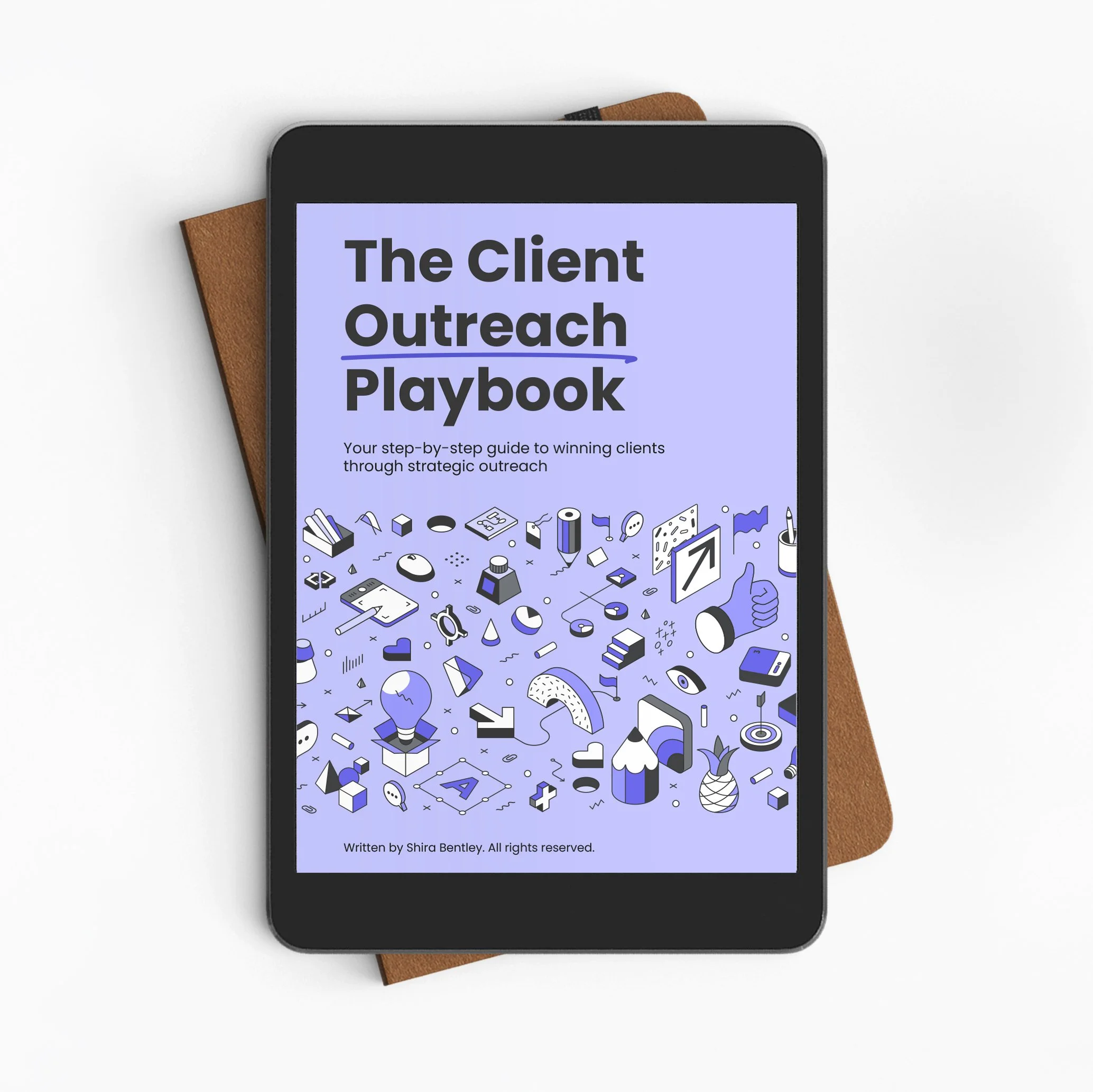
If the outreach part is where you tend to get stuck, The Client Outreach Playbook gives you a practical process to work from.
Inside, you’ll get:
guidance for identifying better-fit clients and contacts
ready-to-use outreach and follow-up scripts
filled examples you can adapt to your own voice
approaches for reconnections, referrals and partnerships
a worksheet and checklist to help you plan your outreach
a tracker to keep conversations and opportunities organised
It’s designed to help you create more opportunities without generic sales scripts or forcing a style that doesn’t feel like you.
Finding clients is an ongoing process
Building a sustainable creative business takes time.
You’re not looking for one perfect platform, one viral post, or one email that changes everything.
You’re building a body of work, a reputation and a network of people who understand what you do and remember you when the right opportunity comes up.
Keep refining your portfolio. Keep nurturing the relationships you already have. Keep putting yourself in front of the people you’d like to work with.
The more consistently you create opportunities, the less you have to rely on luck.
More practical help for your creative business
Explore guides, templates, tools and free resources for designers and illustrators who want more clarity around clients, pricing, portfolios and running their business.

Stay in the loop
Subscribe to my newsletter for thoughtful insights, practical advice, and useful resources for building a sustainable creative business.